How do you plan garden lighting: 12 volt or 230 volt?
By Hovenier Hoofddorp · Updated August 7, 2026
Good garden lighting starts with a plan, not with lamps: light functionally (path, terrace, door), pick one or two accents (a tree, a wall) and leave the rest dark. For most gardens a 12-volt system is the right choice: touch-safe, DIY-friendly without an electrician, easy to extend. Always choose warm white (2200–3000 K) and aim lights downward.
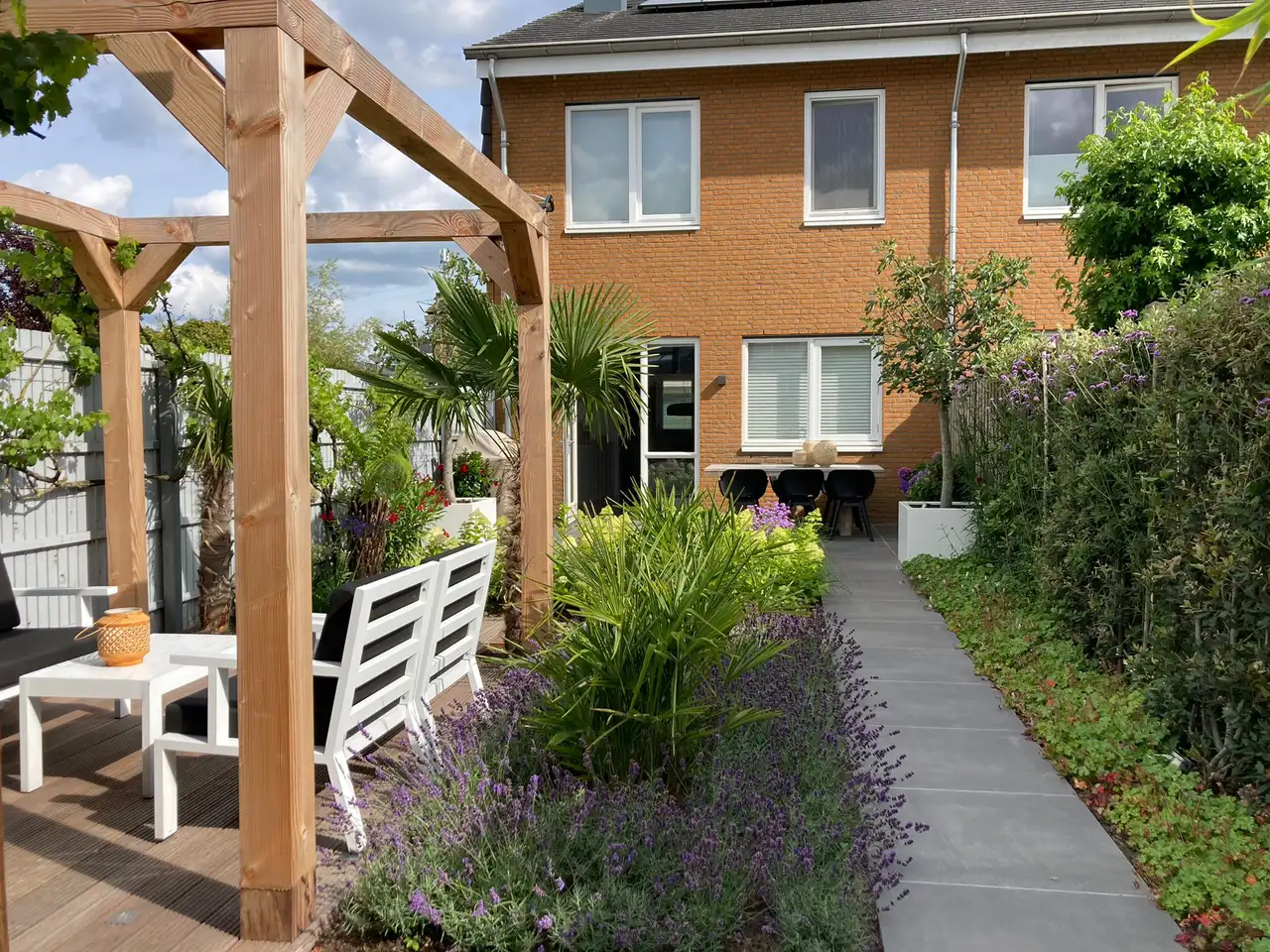
12V or 230V?
| Aspect | 12V (low voltage) | 230V (mains) |
|---|---|---|
| Safety | Touch-safe even with cable damage | Requires waterproof installation |
| Installation | DIY; cable may run shallow along borders | Buried ±60 cm in conduit, certified electrician |
| Extending | Click new lamps onto the main cable | New cabling required |
| Power | Ample for LED garden lighting | Needed for outdoor kitchens, hot tubs, gates |
Practical tip: during any garden renovation, lay one 230V feed (or an empty conduit) to the rear of the garden - nearly free with the ground open, expensive breakwork later. Run everything else on a 12V transformer from there.
How do you build a good lighting plan?
- Function first: path to the door, terrace table, steps - low, downward-facing fittings that never glare.
- One or two accents: an uplight in a multi-stem tree gives the whole garden depth after dark. More accents = less effect.
- Layers: ground level (spots, bollards) and mid-height (wall lights); avoid bright light from above.
- Warm white only: 2200–3000 K. Cool white belongs in car parks.
- Switch smart: dusk sensor or timer for the front path; a separate dimmable group for terrace mood light.
How do you light a garden without harming wildlife?
- Aim everything downward with shielded fittings - no globes radiating in all directions.
- Use timers: darkness after 23:00; all-night mood lighting serves nobody.
- Choose amber to extra-warm white (≤2700 K): demonstrably attracts fewer insects than cool white.
- Keep the back of the garden dark - that is where hedgehogs and bats feed.
We install 12V systems as part of landscaping projects - lighting plan, cabling along the borders and a tidy transformer included.
Frequently Asked Questions
What does installed garden lighting cost?
A 12V starter system with transformer, main cable and 5–8 LED fittings costs roughly €400–€1,200 installed, depending on the brand. A new 230V garden feed adds electrician work - cheapest done during a wider renovation.
May I bury a power cable myself in the Netherlands?
A 12V cable, yes - touch-safe and allowed shallow or surface-run along a border. A 230V cable must go ±60 cm deep in conduit and should be installed or at least connected by a certified electrician. Hence our advice: one professional 230V point, everything else on 12V.
Is solar garden lighting good enough?
For marking a path, yes. For real lighting it disappoints in the Dutch autumn and winter - exactly when you want light, the small panels deliver least. A wired 12V system is more reliable and lasts longer.
Hovenier Hoofddorp is your gardener for the greater Amsterdam area - from garden landscaping and garden maintenance to premium villa gardens with pools, nationwide. Fixed prices, reply within 24 hours.
Rather leave it to us? Request a quote.
We are happy to visit you for honest advice and a clear price. No hassle - just a well-kept garden, with everything explained in English.
Fast Response
We always respond within 24 hours, so you quickly know where you stand.
Professional Results
We work neatly and always leave your garden tidy. A deal is a deal.