Which patio material should you choose: ceramic, natural stone, concrete or wood?
By Hovenier Hoofddorp · Updated August 7, 2026
For most gardens ceramic tiles are the best all-rounder: stain-proof, colour-fast and nearly maintenance-free at €60–€110 per m² for materials. Concrete tiles are the budget choice (€25–€45), natural stone the premium look (€80–€200), and composite decking suits raised terraces. On Dutch clay, the foundation matters more than the tile - skimp there and any patio sinks.
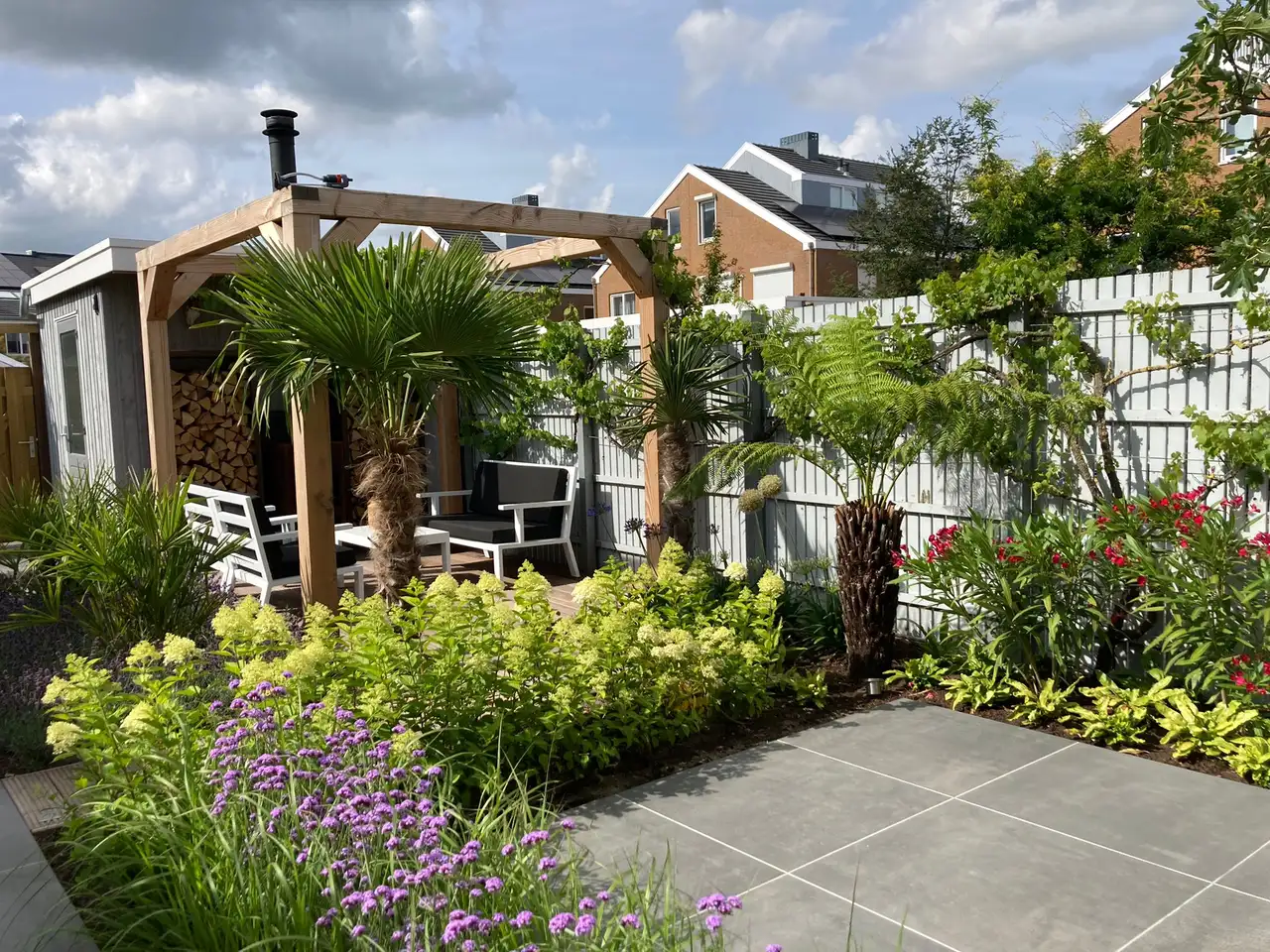
How do the materials compare?
| Material | Price per m² (material) | Maintenance | Watch out for |
|---|---|---|---|
| Concrete tiles | €25–€45 | Average | Stains, fades over time |
| Clay pavers | €30–€80 | Low | Moss in joints; timeless look |
| Ceramic tiles | €60–€110 | Very low | Need a perfect, stable base |
| Natural stone | €80–€200 | Low–average | Limestone stains; ages beautifully |
| Composite decking | €80–€150 | Very low | Gets hot in full sun |
Installed complete, expect €80–€150 per m² including groundwork - see our cost guide.
Why is the base more important than the tile?
Nine out of ten sunken patios failed underground, not on the surface. The correct build-up on the heavy sea clay of this region:
- Excavate 25–30 cm below finished level and compact the clay.
- 15–20 cm crushed hardcore, compacted in layers with a plate compactor.
- 3–5 cm screeded sand or grit bed, laid to a fall.
- Fall of 1–2 cm per metre, always away from the house, so rain drains into the garden.
Ceramic tiles are thin (2 cm) and dead flat - they demand a perfectly level, stable base and are best laid in grit or on pedestals.
Which material suits which garden?
- Modern new-build: large-format ceramic (60×60/80×80) in a light grey - crisp and practical.
- 1930s house or country garden: clay pavers that may age gracefully.
- Around water or raised: composite decking - splinter-free, low care.
- Budget, large area: 50×50 concrete tiles softened with generous borders.
- Climate-smart: keep the patio no bigger than needed, with wide joints or gravel edges so rain can soak away - see our climate-proof garden guide.
Want to see and feel the materials in person first? Visit the showroom of our design partner Sense Garden Experience in Amsterdam - we then carry out the build in your garden.
Frequently Asked Questions
What is the most maintenance-free patio material?
Ceramic tiles: they absorb almost no water, so stains, algae and moss barely grip. Cleaning means sweeping and a yearly wash. Composite is the low-care champion for decking.
How much fall does a patio need?
One to two centimetres per metre, always sloping away from the facade. Without a fall, water pools on the tiles and heads for the house in a downpour.
Why do new-build patios sink so often?
New-build plots consist of disturbed, settling ground, and builders often lay the standard patio straight onto it. A heavier foundation - or waiting a season or two before the definitive patio - is the only cure.
Hovenier Hoofddorp is your gardener for the greater Amsterdam area - from garden landscaping and garden maintenance to premium villa gardens with pools, nationwide. Fixed prices, reply within 24 hours.
Rather leave it to us? Request a quote.
We are happy to visit you for honest advice and a clear price. No hassle - just a well-kept garden, with everything explained in English.
Fast Response
We always respond within 24 hours, so you quickly know where you stand.
Professional Results
We work neatly and always leave your garden tidy. A deal is a deal.