Installing decking: timber or composite, and how is a deck built?
By Hovenier Hoofddorp · Updated August 7, 2026
Decking is the warmest, most natural terrace option and ideal where paving is impractical: over uneven ground, around a pond, or raised at a doorway. The main choice is material: hardwood lasts longest and looks best, composite needs almost no maintenance, and softwood is the budget option with the shortest lifespan.
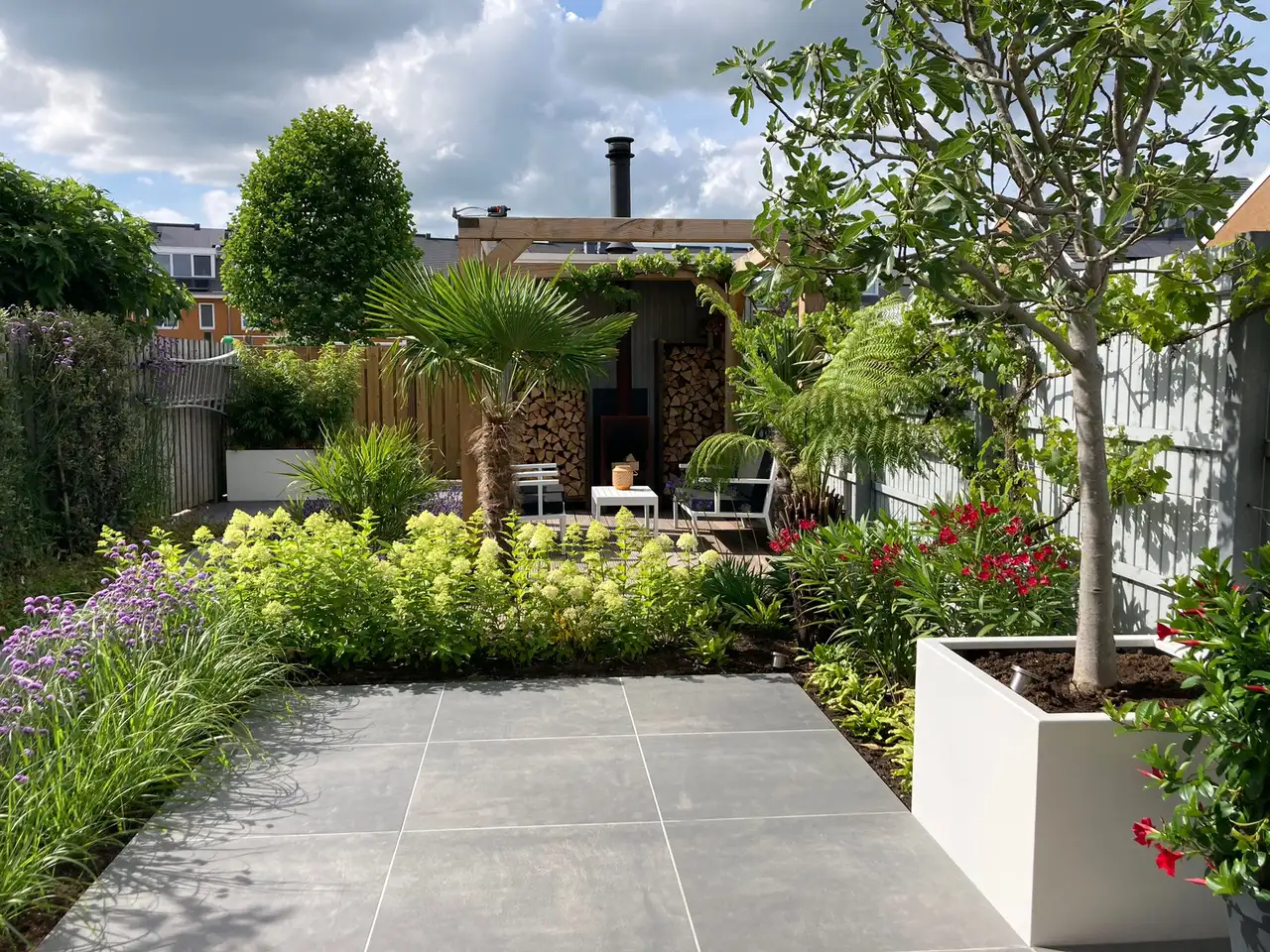
Timber or composite: what suits your garden?
| Material | Lifespan | Maintenance | Character |
|---|---|---|---|
| Softwood (pressure-treated pine) | 8–12 years | Annual staining/oiling | Budget option, greys quickly |
| Hardwood (bangkirai, garapa) | 20–25 years | Periodic oiling to keep colour, ages beautifully untreated | Premium, warm feel |
| Thermo-wood (heat-treated pine) | 15–20 years | Light maintenance | Durable hardwood alternative |
| Composite | 25+ years | Virtually none, occasional cleaning | Consistent colour, less "wood" feel |
Composite gets hotter than wood in full sun - worth considering for a deck that sits in sunshine all day.
How is a deck built?
- Prepare the ground: level it and, for a deck laid directly on soil, add weed membrane with a gravel or paving layer as drainage.
- Build the substructure: joists (e.g. 45×70 mm hardwood or aluminium) on adjustable pedestals or footings, spaced 40–50 cm apart depending on board thickness.
- Keep a fall: decking also needs roughly 1 cm of fall per metre, away from the house, so rainwater does not pool.
- Fit the boards with stainless steel screws or a hidden clip system, leaving 4–6 mm gaps between boards for expansion and drainage.
- Ensure ventilation: keep at least 5–10 cm of clear space under the deck for airflow - this prevents rot on the underside.
How do you maintain a timber deck?
- Hardwood: letting it grey naturally is fine and maintenance-free; to keep the warm colour, oil 1 to 2 times a year.
- Softwood: a yearly stain or oil treatment to prevent rot, especially at board ends and screw holes.
- All timber: sweep off leaves and debris regularly - trapped moisture under leaves is the main cause of rot and slippery algae.
- Composite: occasional scrubbing with water and a soft brush; avoid pressure washers held too close, which can damage the surface.
For paving alternatives alongside decking, see our patio materials guide.
Frequently Asked Questions
Does composite decking get hot in the sun?
Yes, composite can get hotter than wood in full sun, similar to (though less extreme than) artificial grass. For a fully sun-exposed deck, choose a lighter composite colour - it heats up noticeably less than darker tones.
Can decking be laid directly on grass or soil?
Not directly: lay weed membrane with a gravel or paving layer first as a stable, moisture-regulating base, and ensure enough ventilation space under the joists. Decking placed directly on damp soil rots much faster, even hardwood.
What does decking cost compared to paving?
Softwood is comparable to or slightly cheaper than concrete tiles; hardwood and composite sit in a similar price range to natural stone or ceramic. The bigger difference is not the purchase price but maintenance over the lifespan: composite costs more upfront but needs almost no upkeep.
Hovenier Hoofddorp is your gardener for the greater Amsterdam area - from garden landscaping and garden maintenance to premium villa gardens with pools, nationwide. Fixed prices, reply within 24 hours.
Rather leave it to us? Request a quote.
We are happy to visit you for honest advice and a clear price. No hassle - just a well-kept garden, with everything explained in English.
Fast Response
We always respond within 24 hours, so you quickly know where you stand.
Professional Results
We work neatly and always leave your garden tidy. A deal is a deal.