How do you create a climate-proof garden on Dutch clay soil?
By Hovenier Hoofddorp · Updated August 7, 2026
A climate-proof garden on Dutch clay comes down to three things: improve the soil structure with compost, manage the water, and choose tough plants that tolerate both soggy winters and dry summers. The Haarlemmermeer polder was drained in 1852 and sits 4–5 metres below sea level; its sea-clay soil is highly fertile but heavy and prone to waterlogging.
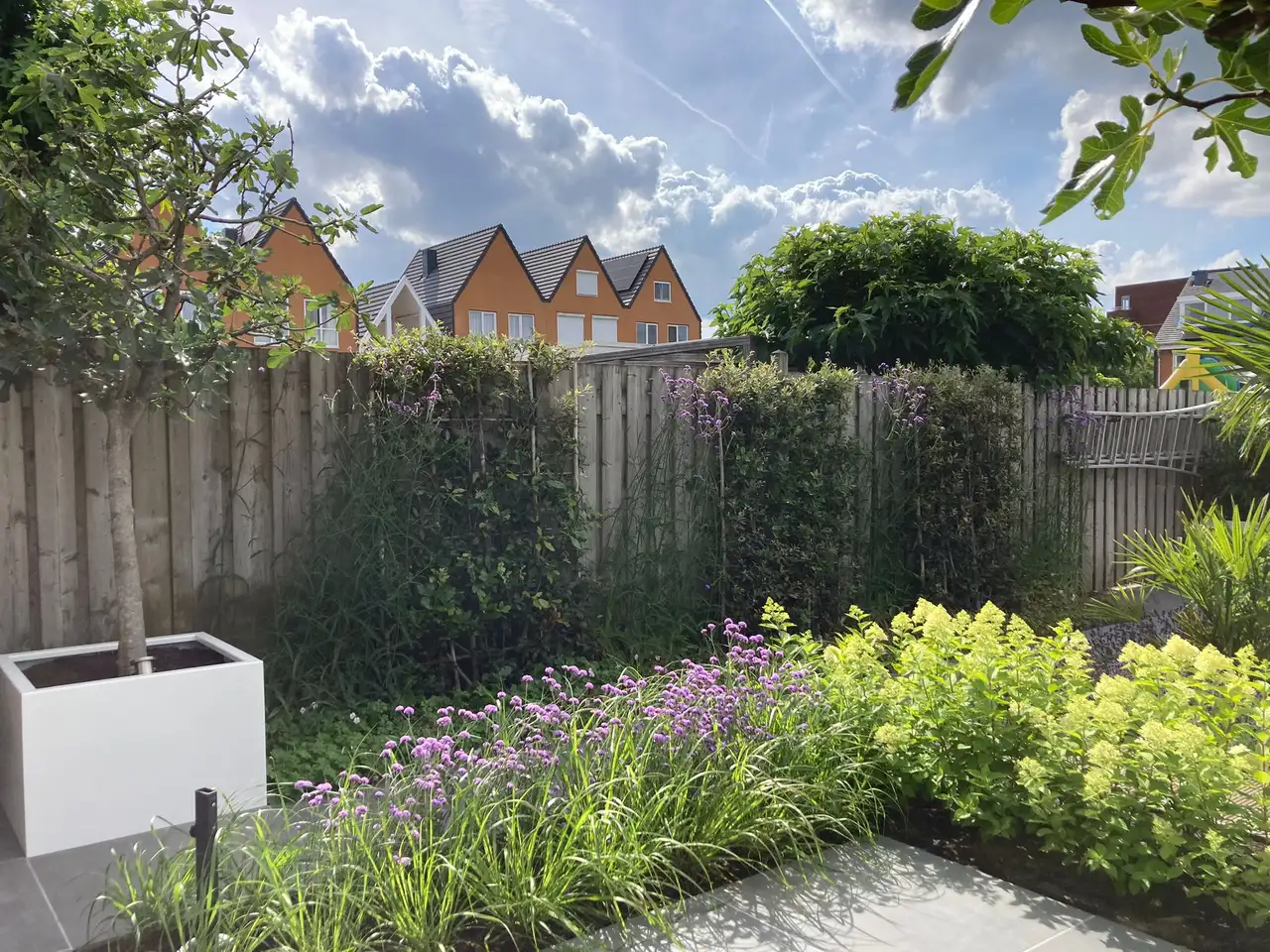
What is special about clay soil - and how do you improve it?
Clay is nutrient-rich and holds moisture well - plants that establish thrive. The downsides: it saturates in wet winters (roots suffocate) and bakes rock-hard in dry summers. The fix is structural, not radical: work 5–10 cm of compost into the top 20–30 cm every year. After two to three seasons you have an airy, fertile topsoil. Digging out the clay and replacing it with potting soil is almost never necessary - and wastes its fertility.
Which plants thrive on clay?
- Perennials: hosta, hardy geranium, daylily (hemerocallis), rudbeckia, salvia, astilbe and Siberian iris.
- Ornamental grasses: miscanthus and calamagrostis - both handle clay and the open polder wind.
- Shrubs: cornus (dogwood), viburnum, spiraea, weigela and hydrangea.
- Trees: alder, willow, hawthorn, crab apple - and fruit trees: apple and pear love clay.
- Ground covers: geranium macrorrhizum, pachysandra and vinca keep the soil covered, suppress weeds and protect clay from drying out.
Want a plan tailored to your garden? See our planting plan service - it includes a soil inspection at your home.
How do you prevent both waterlogging and drought damage?
- Fewer tiles, more green: every m² of paving you replace with planting lets rain soak into the soil. Rule of thumb: keep hard surfacing under 40–50% of the garden.
- Permeable paving: wide joints or gravel sections where possible.
- Drainage for structural wet spots: perforated pipes at 50–60 cm depth to a ditch or soakaway - see our drainage guide.
- Harvest rainwater: a water butt or underground tank; many Dutch municipalities subsidise this.
- Mulch the borders: a 5 cm layer of compost or wood chips stops clay from cracking in summer.
Frequently Asked Questions
When is the best time to plant in clay soil?
Autumn (October–November): the soil is warm, workable and moist, so roots establish over winter. Early spring works too. Avoid working wet winter clay - you destroy its structure - and bone-dry summer clay.
Should I replace my clay soil with garden soil?
No. Clay is among the most fertile soils there is. Improve its structure with yearly compost instead - cheaper, better and permanent. Only for raised beds or lawns with structural drainage problems is adding a sandy top layer sensible.
Can I have a good lawn on clay?
Yes - clay grows strong grass, provided drainage is right. Scarify twice a year, aerate annually (spiking the turf) and build in a slight fall when laying a new lawn. Persistent puddles call for drainage beneath the lawn.
Does a water butt really help against drought?
A 200-litre butt is useful for pots and young plants, not for a whole garden. The bigger win is in the soil: clay rich in organic matter with a mulch layer holds thousands of litres. Combine both.
Hovenier Hoofddorp is your gardener for the greater Amsterdam area - from garden landscaping and garden maintenance to premium villa gardens with pools, nationwide. Fixed prices, reply within 24 hours.
Rather leave it to us? Request a quote.
We are happy to visit you for honest advice and a clear price. No hassle - just a well-kept garden, with everything explained in English.
Fast Response
We always respond within 24 hours, so you quickly know where you stand.
Professional Results
We work neatly and always leave your garden tidy. A deal is a deal.