Creating a bird- and bee-friendly garden: a practical guide
By Hovenier Hoofddorp · Updated August 7, 2026
A bird- and bee-friendly garden comes down to three basic needs: food throughout the year, water, and shelter for hiding and nesting. You do not need to let the garden go wild - with the right plant choices and a few targeted changes, even a tidy, well-kept garden becomes a habitat for birds, bees and butterflies.
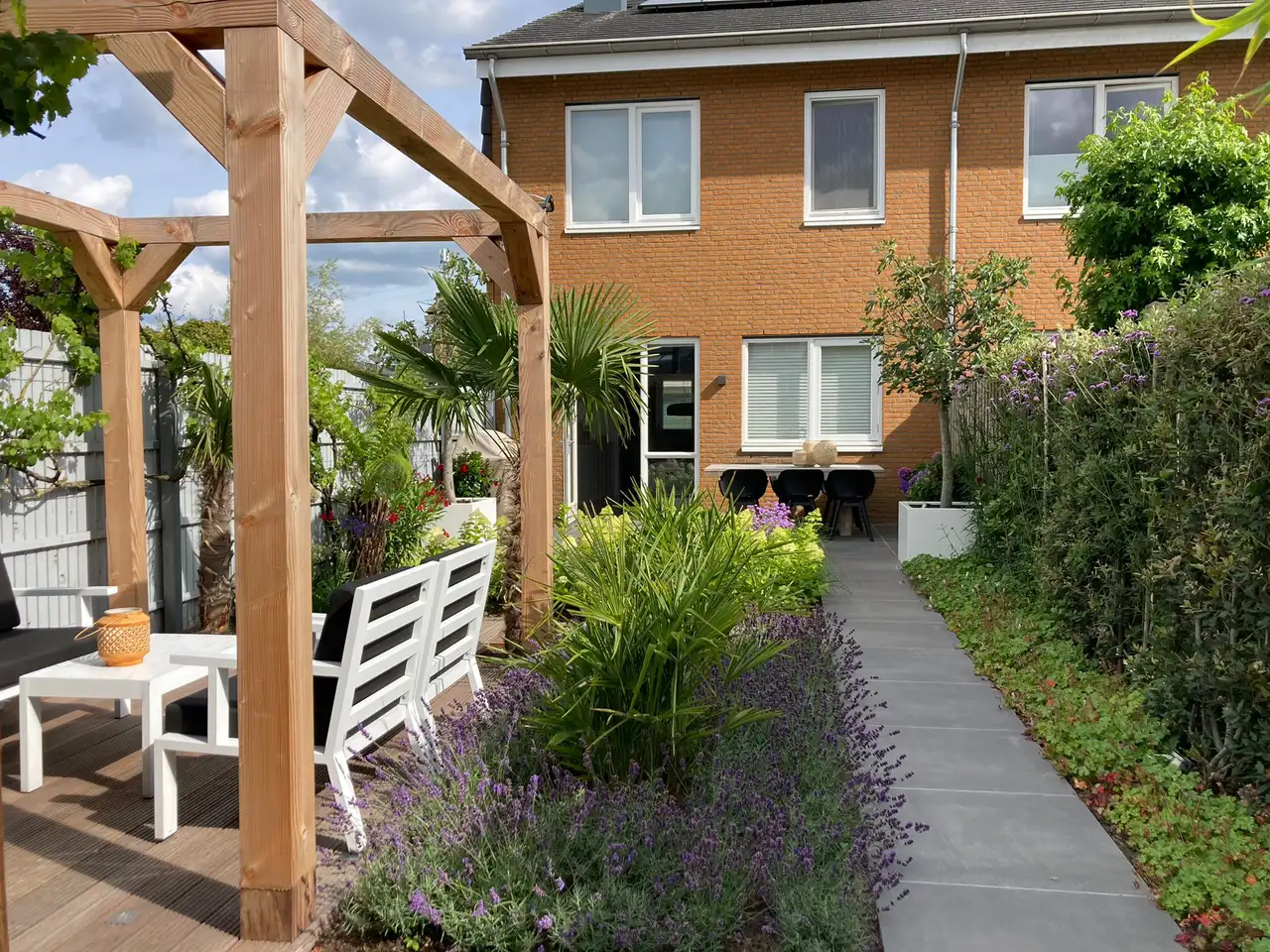
Which plants attract bees and butterflies?
- Early spring forage: crocus, snowdrop, willow (an important first pollen source after winter) and hellebore.
- Summer forage: lavender, salvia, echinacea, catmint and buddleia - magnets for bees, bumblebees and butterflies.
- Autumn forage: ivy flowers as one of the last plants in October and is crucial for bees heading into winter.
- Avoid double-flowered cultivars where possible: they look full but often have little usable pollen or nectar left for insects. Choose single, close-to-original flower forms where you can.
See also our climate-proof planting guide for species that thrive on local clay soil and support wildlife.
How do you make the garden attractive to birds?
- Berry-bearing shrubs: elder, hawthorn, dogwood and firethorn give birds food from summer into winter.
- Nest boxes at 2 to 4 metres height, sheltered from wind and out of full afternoon sun, ideally facing east to north-east.
- Leave a "wild" corner: a patch of dense shrubs, a log pile, or a border that is not cut back completely every autumn provides shelter and overwintering spots for insects that birds then feed on.
- Leave spent seedheads standing in autumn (ornamental grasses, echinacea, coneflower) - a natural winter food source for finches and tits.
- A water source: a shallow water dish with a few stones (as landing spots) will be used by almost every garden bird.
How do you combine a tidy garden with biodiversity?
A bird- and bee-friendly garden does not have to look messy:
- Phase your pruning: do not cut the whole garden back in one weekend - spread the work across the season so there is always cover and food somewhere.
- Choose 1–2 deliberate "wild corners" rather than letting the whole garden go - often enough for a noticeable increase in birds and insects.
- Replace part of the lawn with a flowering strip or herb mix - narrow strips along a border look tidy and are excellent for insects.
- Skip broad-spectrum pesticides: they harm not just the "pest" but also bees, ladybirds and the birds that feed on them.
Mind the breeding season (15 March – 15 July) when pruning: check hedges and shrubs for nests before trimming - see our garden calendar.
Frequently Asked Questions
Which plants are best for bees in a small garden?
Lavender, catmint, salvia and thyme are compact, flower for a long period and attract plenty of bees - ideal for small gardens and pots. Add ivy for a climbing wall or border: it flowers late in the year when little else does, making it disproportionately valuable for bees.
When can I put up and clean nest boxes?
Put nest boxes up in autumn or winter, so birds already know them by spring. Clean empty boxes after the breeding season, between September and January - during the breeding season (15 March – 15 July) an occupied box must not be disturbed.
Does a wildlife-friendly garden also attract pests?
No, generally the opposite: a garden with plenty of bees, birds and other natural predators tends to keep pests like aphids and caterpillars better balanced than a bare, "tidy" garden. Birds and ladybirds do a large part of the pest control for you.
Hovenier Hoofddorp is your gardener for the greater Amsterdam area - from garden landscaping and garden maintenance to premium villa gardens with pools, nationwide. Fixed prices, reply within 24 hours.
Rather leave it to us? Request a quote.
We are happy to visit you for honest advice and a clear price. No hassle - just a well-kept garden, with everything explained in English.
Fast Response
We always respond within 24 hours, so you quickly know where you stand.
Professional Results
We work neatly and always leave your garden tidy. A deal is a deal.