Which Sand for Paving? Foundation & Structure Explained
By Hovenier Hoofddorp · Updated August 7, 2026
Most sunken paving and loose pavers are not caused by poor laying, but by the wrong foundation. Under a patio a 10 to 15 cm sand bed is usually enough; under a driveway that has to carry cars, 20 to 30 cm of crushed aggregate is needed, sometimes with an extra stabilised layer. Which sand you use where - and why - is explained below.
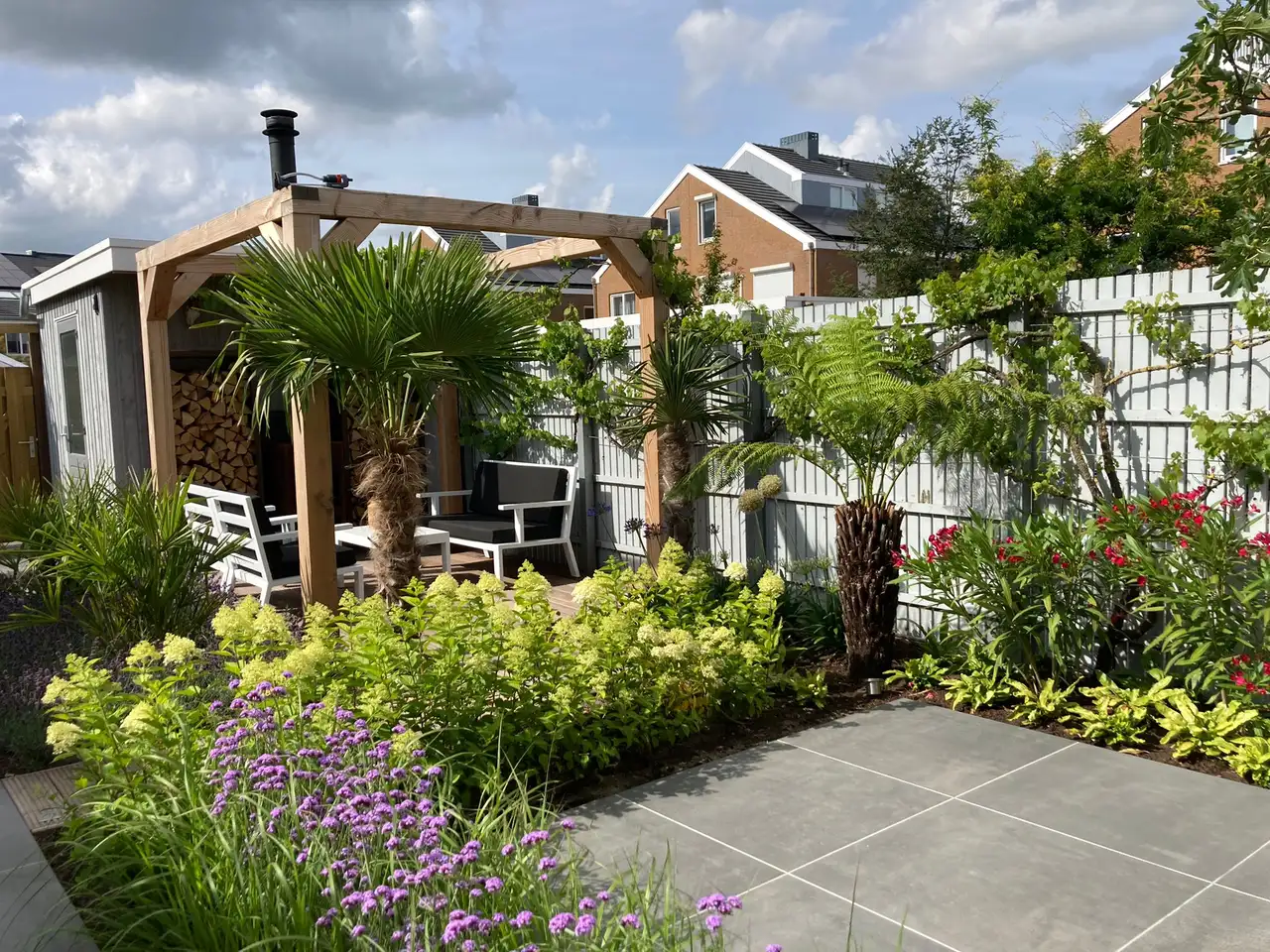
Which sand types are used for paving?
| Sand type | What it's for | Notes |
|---|---|---|
| Bedding sand | Sand bed directly under pavers/slabs | Fine-screened, compacts well, drains freely |
| Sharp sand | Deeper foundation layer, mortar | Coarser and more angular, gives stability under load |
| Kiln-dried/jointing sand | Filling the joints | Angular grain locks pavers in place |
| Polymeric sand | Jointing with a binder | Sets hard once wetted, resists weeds and ants better; only on fully dry paving |
The most common mistake is too little or too fine sand in the base layer: it does not compact enough and settles over time, especially on the heavier clay soil around Haarlemmermeer.
How do you build up the foundation under a patio or driveway?
- Patio (pedestrian): a sand bed of 10 to 15 cm; on soft ground such as clay or peat, 20 to 25 cm is safer.
- Driveway (cars): a foundation of 20 to 30 cm crushed aggregate or rubble, sometimes topped with a 15 cm layer of stabilised sand-cement. A 10 cm foundation is too thin for a driveway and will sag under vehicle weight.
Each layer is compacted separately with a plate compactor before the next goes on. Skip a layer or under-compact, and the result usually only becomes visible after the first winter, in the form of sunken paving.
Why does the right foundation matter more on clay soil?
Clay expands when wet and shrinks when dry, far more than sandy soil. Without a properly sized, well-compacted foundation, that movement transfers straight into your paving. We take this into account on every job with a foundation matched to the ground and intended use (pedestrian or vehicle). Already dealing with sunken paving? See our guide on fixing sunken paving.
Frequently Asked Questions
What is the difference between bedding sand and sharp sand?
Bedding sand is finer-screened and used as the sand bed directly under pavers or slabs. Sharp sand (also called coarse sand) is coarser and more angular, used deeper in the foundation and in mortar because it gives better stability under load.
Can I just top up old jointing sand with new sand?
Yes, topping up existing joint sand is fine as long as the joints are not too deeply worn. Preferably use the same sand type already in place, or switch to polymeric sand for a longer-lasting result against weeds and ants.
Is polymeric sand worth the extra cost over regular jointing sand?
For a driveway or patio where you want to prevent weeds and ant nests in the joints, often yes: polymeric sand sets into a firm, water-permeable joint and washes out less easily. It does need to be laid correctly on fully dry paving, or it sets incorrectly.
What happens if the foundation under my driveway is too thin?
The paving sinks locally under the weight of a car, often visible within a year or two along the tyre tracks. Fixing it means lifting the paving and rebuilding the foundation to the correct depth - usually more expensive than getting it right the first time.
Hovenier Hoofddorp is your gardener for the greater Amsterdam area - from garden landscaping and garden maintenance to premium villa gardens with pools, nationwide. Fixed prices, reply within 24 hours.
Rather leave it to us? Request a quote.
We are happy to visit you for honest advice and a clear price. No hassle - just a well-kept garden, with everything explained in English.
Fast Response
We always respond within 24 hours, so you quickly know where you stand.
Professional Results
We work neatly and always leave your garden tidy. A deal is a deal.